
Makhana Benefits: Why Fox Nuts Are a Superfood Snack
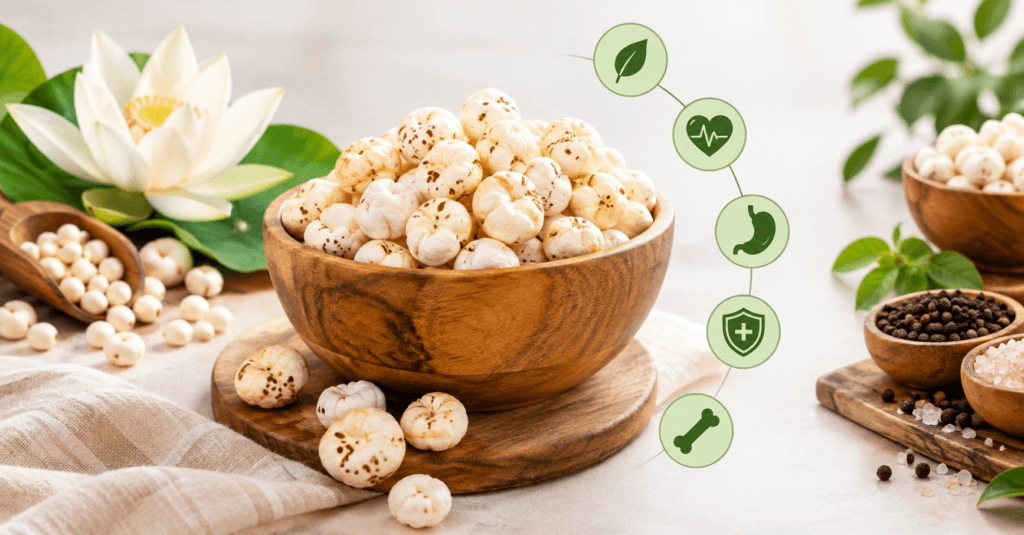
Looking for a healthy, crunchy snack that supports your wellness goals? The answer lies in makhana benefits. Also known as fox nuts or phool makhana, these light, puffed seeds from the Euryale ferox plant are packed with nutrition and have been valued in Indian diets for centuries.
In this guide, we explore the top makhana benefits, nutritional value, everyday uses, and answers to common questions so you can enjoy roasted makhana the smart way.
Nutritional Profile of Makhana
Per 100g of plain roasted makhana (approximate values):
- Calories: 347 kcal
- Protein: 9.7 g
- Fat: 0.1–0.5 g
- Dietary Fibre: 14.5 g
- Carbohydrates: 76 g
- Magnesium, calcium, potassium and iron in good amounts
- Low glycemic index (around 37–54)
- Zero cholesterol and almost no sodium
This impressive profile forms the foundation of most makhana benefits.
Top 10 Makhana Benefits
- Supports Weight Loss
One of the most popular makhana benefits is weight management. Low in fat and calories yet high in protein and fibre, roasted makhana keeps you full longer and reduces unhealthy snacking. - Heart Health
Rich in potassium and magnesium while being extremely low in sodium and fat, makhana helps maintain healthy blood pressure and supports overall heart function. - Blood Sugar Control
Thanks to its low glycemic index and high fibre, makhana releases energy slowly. This makes it a smart snack for people watching their blood sugar levels. - High Plant Protein
With nearly 10 g of protein per 100 g, makhana is an excellent plant-based protein source for vegetarians and fitness enthusiasts. - Digestive Health
The high dietary fibre content aids digestion, promotes gut health and prevents constipation. - Bone Strength
Calcium, phosphorus and magnesium in makhana contribute to stronger bones and may help reduce the risk of bone-related issues. - Antioxidant & Anti-Ageing Properties
Makhana contains beneficial compounds such as kaempferol that help fight oxidative stress and support healthy ageing. - Low-Calorie Snacking
A 30 g serving of roasted makhana gives only about 100–110 calories, making it ideal for mindful eating. - Gluten-Free & Easy to Digest
Naturally gluten-free, makhana is suitable for people with gluten sensitivity and is light on the stomach. - Versatile Superfood
From fasting (vrat) food to modern flavoured snacks, the makhana benefits extend to almost every lifestyle.
How to Use Makhana (Everyday Usages)
- Roasted Snack: Dry roast or lightly toss in ghee with salt, black pepper, peri-peri or herbs.
- Weight-Loss Evening Snack: 25–30 g of plain roasted makhana instead of chips or namkeen.
- Makhana Kheer: Traditional sweet made with milk, especially popular during festivals and fasting.
- Trail Mix: Combine with nuts, seeds or dried fruits.
- Smoothie Booster: Add a handful of roasted makhana for extra crunch and nutrition.
- Savoury Dishes: Use in curries, stir-fries or as a crunchy topping.
These simple usages help you enjoy maximum makhana benefits daily.
How Much Makhana Should You Eat?
For most healthy adults, 25–40 g per day is ideal. Start with a small handful (about 30 g) as a snack and adjust based on your calorie needs.
Frequently Asked Questions (FAQ)
Q1. What are the main makhana benefits?
The top makhana benefits include support for weight loss, heart health, blood sugar control, high protein intake, better digestion and bone strength.
Q2. Is makhana good for weight loss?
Yes. Low calorie, high fibre and high protein make roasted makhana one of the best snacks for weight management.
Q3. Can diabetics eat makhana?
Yes. Its low glycemic index helps prevent sudden spikes in blood sugar when consumed in moderation.
Q4. Are fox nuts and makhana the same?
Yes. Fox nuts, phool makhana and lotus seeds (commonly) all refer to the same popular snack.
Q5. How should I store makhana?
Keep roasted makhana in an airtight container in a cool, dry place to maintain crunch and freshness.
Leave a Comment